This guide delves into the powerful capabilities of watch windows, essential tools for debugging applications. Understanding how to leverage watch windows to monitor cell values is crucial for effective software development. From basic variable tracking to advanced profiling, this resource equips developers with the knowledge to effectively utilize these tools.
Watch windows offer a dynamic way to observe the state of variables and expressions during program execution. This allows for a detailed understanding of program behavior and quick identification of potential issues. The guide explores different types of watch windows, customization options, and troubleshooting strategies.
Introduction to Watch Window
The watch window is a crucial debugging tool in software development environments. It allows developers to dynamically monitor the values of variables during program execution. This real-time observation of variable states aids in identifying potential issues and understanding program flow. Its primary function is to provide a snapshot of data at specific points in the code, simplifying the debugging process.The watch window serves as a live view of variable values.
It displays not just the current value, but also any changes to the variable throughout the debugging session. This provides invaluable insight into how a program behaves and allows developers to trace the progression of data. This constant monitoring greatly reduces the time spent on troubleshooting and helps quickly isolate errors.
Purpose of Watch Window
The watch window is primarily designed for observing variable values during program execution. This differs from simply examining code; the watch window is a dynamic, real-time tool for tracking changes. It enables developers to see how variables are modified within the program’s context. This is particularly helpful when tracing the flow of data and identifying the source of unexpected behavior.
It’s a valuable tool for troubleshooting complex logic and data manipulation.
Types of Watch Windows
While many development environments offer watch windows, the core functionality remains consistent. They are not categorized into distinct types, but rather tailored to the specific environment and the needs of the programmer. The fundamental capability remains the same: to display variable values in real time.
Watch Windows vs. Other Debugging Tools
Watch windows are distinct from other debugging tools like breakpoints and step-through options. Breakpoints pause the program at a specified line, allowing examination of the state at that instant. Step-through tools allow for controlled, sequential execution, providing a view of the program’s progression. Watch windows, however, provide an ongoing, dynamic view of variable values, complementing breakpoints and step-throughs.
This constant monitoring allows the developer to observe the effect of changes on multiple variables. This dynamic observation of variable values complements other tools.
Scenarios where Watch Windows are Beneficial
Watch windows are particularly beneficial in several situations. They are invaluable when dealing with complex calculations or data structures, enabling developers to see how the program handles intricate logic. This is particularly true when debugging algorithms or when unexpected results occur. For instance, a watch window can reveal why a loop is not terminating as expected, or why a particular data structure is being modified unexpectedly.
Opening a Watch Window
The method for opening a watch window varies depending on the development environment (e.g., Visual Studio, Eclipse, Xcode). Generally, a menu option or a toolbar button is available to initiate the watch window. Consult the documentation specific to your development environment for detailed instructions. For instance, in Visual Studio, the watch window is usually accessed via a menu command.
The procedure is specific to each development platform. Each environment has its own interface.
Variables and Expressions
The watch window provides a dynamic view of variables and expressions within your code’s execution context. This allows you to observe the values of variables at specific points during debugging, crucial for identifying issues and understanding program flow. Understanding how to effectively utilize variables and expressions in the watch window is essential for efficient debugging.Adding variables to the watch window is straightforward.
Simply type the variable name into the watch window’s input field and press Enter. The watch window will update to display the current value of the variable.
Adding Variables
This process mirrors the way you interact with variables in your code. By inputting a variable’s name, the window dynamically reflects the variable’s value. This real-time display is essential for debugging, allowing you to trace how values change as your program runs. This straightforward approach is highly effective for rapid debugging.
Data Types
Monitoring different data types is supported within the watch window. These include:
- Integers: Represent whole numbers. For instance, if a variable ‘count’ holds the value 10, the watch window will reflect this integer value.
- Floating-point numbers (floats): Represent numbers with decimal points. If a variable ‘price’ holds the value 99.99, the watch window will accurately show this float.
- Strings: Represent text. If a variable ‘message’ holds the value “Hello, world!”, the watch window will display the string.
- Booleans: Represent truth values (true or false). If a variable ‘isValid’ is true, the watch window will reflect this boolean value.
- Arrays: Represent ordered collections of data. If a variable ‘data’ is an array containing [1, 2, 3], the watch window will display the array contents.
- Objects: Represent complex data structures with properties. If a variable ‘person’ is an object with properties like name and age, the watch window will display the object’s structure.
Adding Expressions
The watch window isn’t limited to variables; it can also evaluate expressions. This capability allows you to monitor complex calculations or relationships between variables in real-time.
Dynamic Evaluation
The watch window dynamically evaluates expressions. For example, if you enter the expression ‘x + 5’, and ‘x’ is a variable in the scope, the window will display the result of the calculation as ‘x’ changes. This dynamic evaluation allows for real-time observation of the outcome of complex operations.
Monitoring Complex Objects
For complex object structures, the watch window may display the structure’s contents in a formatted manner, helping you inspect specific properties. If a variable represents a database record with multiple fields, the watch window can clearly display the values of these fields. This clear display of complex data structures aids in understanding how the program manipulates these structures. For instance, if a ‘customer’ object has properties like ‘name’, ‘address’, and ‘orderHistory’, you can observe the complete structure and each field’s value.
Monitoring Cell Values
Monitoring cell values within a watch window is a crucial debugging technique. It allows developers to observe the state of variables at specific points during program execution, enabling them to track changes and identify potential issues. This section delves into various methods for monitoring cell values, highlighting their advantages and disadvantages, and showcasing practical examples.
Comparison of Monitoring Methods
Different methods offer varying levels of detail and control when monitoring cell values. A systematic comparison helps developers select the most appropriate approach for their specific needs.
| Monitoring Method | Description | Advantages | Disadvantages |
|---|---|---|---|
| Direct Observation | Simple observation of the cell’s value in the watch window. | Easy to implement; requires minimal setup. | Limited to observing the current value; doesn’t show change over time. |
| Conditional Watch | Watching a cell’s value only when a specific condition is met. | Focuses attention on relevant changes; avoids clutter. | Requires defining the condition; can miss important changes if the condition is not appropriate. |
| Custom Watch Expressions | Monitoring calculated values derived from multiple cells. | Allows for complex monitoring and data analysis. | Requires understanding of the expressions; may introduce overhead if calculations are complex. |
Monitoring Changes Over Time
The watch window can be utilized to track changes in cell values over time. This involves continuously observing the value of a variable or expression.
Debugging Scenarios
Understanding how to monitor cell values is crucial for debugging various programming scenarios. Consider the following examples:
- Loop Iteration: Watching a counter variable during a loop iteration helps determine if the loop executes the expected number of times. This is vital for identifying potential off-by-one errors or infinite loops. For instance, in a loop iterating 100 times, the watch window could display the current value of the counter variable, allowing developers to confirm the correct loop execution.
- Data Processing: When processing large datasets, monitoring intermediate results in calculations is essential. A watch window can display the value of a variable holding intermediate data, helping identify errors in processing algorithms.
- Function Calls: Monitoring function parameters and return values helps identify issues with function calls. For example, the watch window can be used to inspect values passed to a function and the result returned from it, pinpointing any errors in parameter handling or return values.
Using Breakpoints for Watch Window Updates
Breakpoints are essential for controlling when watch window updates occur. They allow developers to pause program execution at a specific point, allowing the watch window to display the current state of variables.
- Setting Breakpoints: Inserting breakpoints at strategic locations in the code triggers a pause in execution when the program reaches that point. The watch window can then be used to inspect variables.
- Triggering Updates: The breakpoints trigger updates to the watch window, allowing real-time monitoring of cell values as the program runs. This facilitates the detection of issues and helps understand program flow.
Customizing Watch Window Behavior
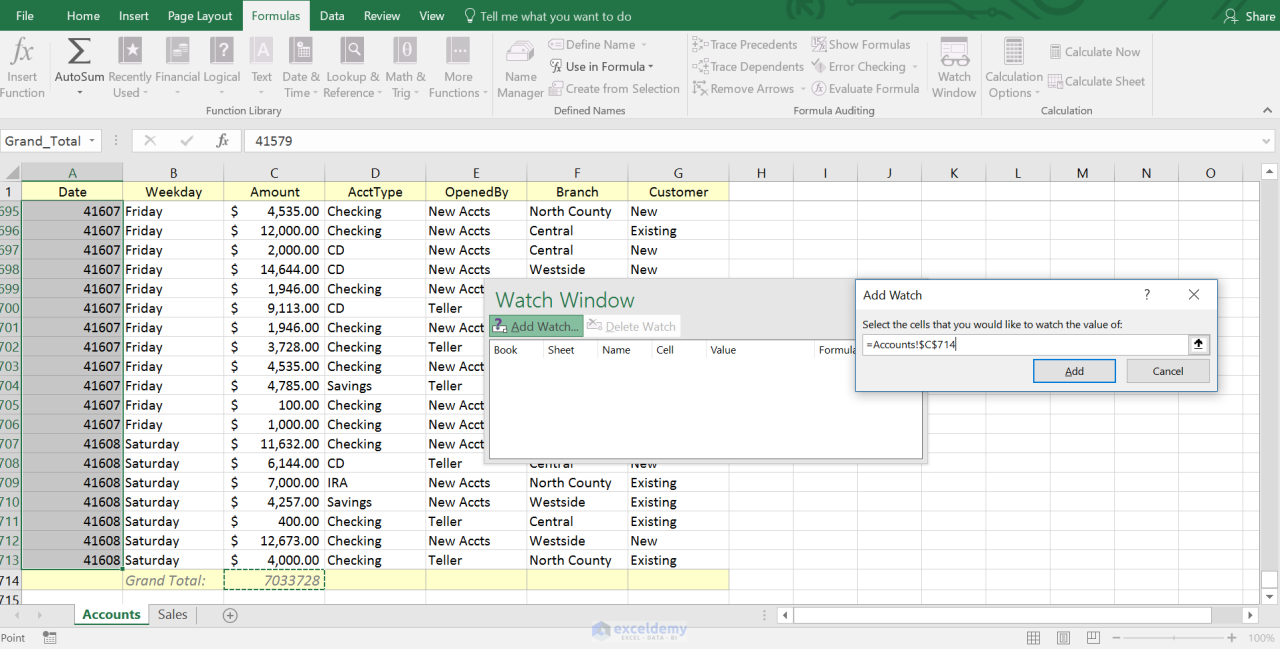
The watch window, a valuable debugging tool, allows for real-time monitoring of variables and expressions. Beyond basic display, the watch window offers customization options to tailor its presentation to the specific needs of the developer. This flexibility enhances debugging efficiency by providing a more focused and informative view of the data.
Display Formatting Options
The watch window’s display format can be significantly customized to present data in a more understandable way. This customization allows developers to easily grasp crucial information without extensive manual calculation or conversion. Different data types and formats can be presented in ways that are more efficient and informative.
| Data Type | Default Format | Custom Format String | Description |
|---|---|---|---|
| Integer | 123 | “0:X” | Displays the integer in hexadecimal format. |
| Floating-point | 123.456 | “0:F2” | Displays the floating-point value with two decimal places. |
| String | “Hello” | “0:t” | Formats the string in title case. |
| Date/Time | 1/1/2024 10:00 | “0:yyyy-MM-dd HH:mm:ss” | Formats the date and time in a custom, user-friendly format. |
Custom Formatting Strings
Custom formatting strings provide a powerful mechanism to control the appearance of watched values. These strings, using format specifiers, enable developers to present data in various formats, making it easier to interpret the information quickly. For example, using “0:C” formats a numeric value as currency. “0:P” formats it as a percentage. The format specifier “0:E” displays a floating-point number in scientific notation.
The flexibility in formatting greatly enhances the debugging process.
Layout Customization
The watch window’s layout can be adjusted to improve the developer’s workflow. This includes the ability to rearrange the order of watched items, allowing for a more intuitive and streamlined display.
- Rearranging Items: Watch items can be moved up or down in the watch window’s display. This feature is crucial for keeping related data together, facilitating a more organized and efficient debugging process.
- Column Width Adjustment: Columns can be resized to accommodate various data lengths. This adjustment improves the readability of data by ensuring that all relevant information fits within the available space. This prevents the need to scroll or resize the window frequently.
- Filtering: The ability to filter items based on certain criteria. This feature helps developers quickly focus on specific aspects of the data being monitored. It enhances efficiency by providing a more focused and informative view.
Common Customizations
Customizing the watch window for optimal use involves several common practices:
- Grouping related variables for easier understanding and analysis.
- Formatting data to match the desired presentation style.
- Arranging the watch window layout to maximize the display of important information.
- Using custom formatting strings for enhanced readability of different data types.
Troubleshooting Common Issues
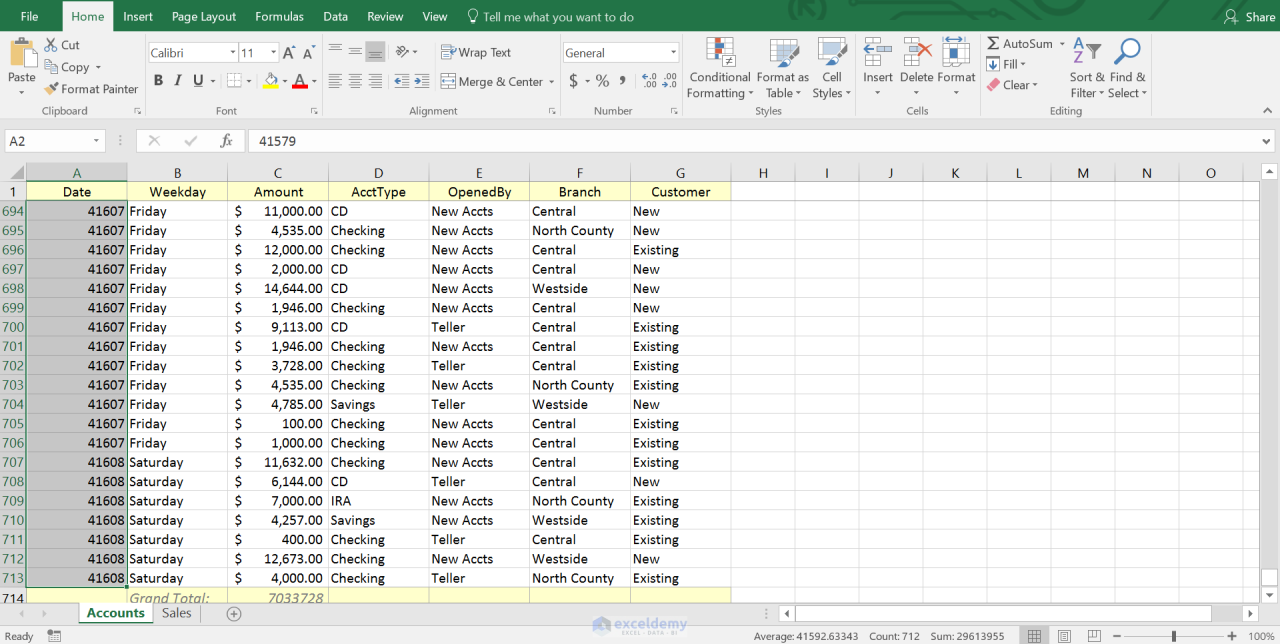
The watch window, while a valuable debugging tool, can occasionally exhibit unexpected behavior. Understanding common issues and their solutions can significantly streamline the debugging process. This section details potential problems and effective strategies for resolving them.Inaccurate or incomplete updates to the watch window can stem from various factors, including asynchronous operations, complex data structures, or issues with the underlying data source.
By understanding these potential causes and employing appropriate troubleshooting techniques, developers can effectively leverage the watch window’s functionality.
Identifying Issues with Data Types
Different data types can present unique challenges in the watch window. For instance, large arrays or complex objects might not display all elements or attributes due to memory constraints. Additionally, custom data types or structures might require custom display formats for effective monitoring. This section addresses strategies for resolving such issues.
- Large Datasets: When dealing with large arrays or data structures, the watch window may only display a limited subset of elements. Consider using slicing or indexing techniques to focus on specific parts of the data for inspection, or consider alternative debugging strategies such as printing to the console, which might provide a more comprehensive view.
- Custom Data Structures: If the watch window doesn’t display custom data structures correctly, it might be necessary to define custom display formats. This often involves defining methods within the class or structure to represent the data in a manner that the watch window can understand.
- Complex Objects: The watch window might not show all properties of a complex object. Use dot notation or bracket notation to access and display specific properties or nested elements. For intricate cases, employing the debugger’s stepping functionality to trace the flow of execution can also be helpful.
Handling Asynchronous Operations
Asynchronous operations introduce complexity in watch window monitoring. Values may not update instantly due to the asynchronous nature of the operation, requiring additional techniques to track the progress and final state.
- Delayed Updates: If a variable is updated asynchronously, the watch window may not reflect the changes immediately. Employ techniques like using a callback function to update the variable or monitoring the variable at specific points in the execution flow.
- Conditional Updates: If the asynchronous operation depends on certain conditions, use conditional checks or intermediate variables to capture the state of the variable before and after the operation to monitor its changes.
- Event-driven Systems: For event-driven systems, the watch window may not reflect changes until the event occurs. Employ event listeners or callbacks to observe the changes and update the watch window accordingly.
Debugging Scenarios and Solutions
This section presents debugging scenarios involving watch window malfunctions and their corresponding solutions.
- Scenario: A watch window shows an incorrect value for a variable after a function call. Solution: Verify that the function call has completed and that the variable update occurred as expected. Check the function’s logic and any possible race conditions that might lead to the incorrect update. If the issue persists, step through the code with the debugger to trace the execution path and identify the point of the error.
- Scenario: The watch window doesn’t update after a change to a variable within a loop. Solution: Ensure that the variable is updated correctly within the loop’s iterations. Check if the update happens after the current iteration or if there are any external factors causing delays in the updates.
Best Practices for Effective Use
Employing best practices can significantly enhance the efficiency of using the watch window for debugging.
- Selective Monitoring: Monitor only the variables directly relevant to the issue being investigated, to avoid unnecessary clutter and improve clarity.
- Combined with Other Tools: Use the watch window in conjunction with other debugging tools, such as breakpoints and stepping through the code, to gain a comprehensive understanding of the program’s behavior.
- Logging and Console Output: Supplement the watch window with logging and console output to capture additional data points and aid in understanding the program’s flow and variable values at various stages.
Advanced Techniques
Watch windows, while fundamental for basic debugging, become even more powerful when used for advanced tasks. They allow in-depth analysis of complex algorithms and procedures, enabling developers to identify performance bottlenecks and memory issues more efficiently. This section delves into advanced techniques for leveraging watch windows for these purposes.Using watch windows for complex algorithms or procedures often involves monitoring multiple variables and their interactions simultaneously.
This allows developers to trace the flow of data and identify the points where issues might arise, enabling them to pinpoint the source of errors in sophisticated programs or scripts.
Analyzing Complex Algorithms
Watch windows excel at tracing the execution of complex algorithms. By monitoring critical variables at key steps, developers can gain valuable insight into the algorithm’s behavior. For example, in a sorting algorithm, monitoring the values of the array elements during each iteration can help identify the sequence of comparisons and swaps. This detailed observation helps understand the algorithm’s functionality and potential areas of improvement.
Profiling Performance
Watch windows can aid in performance analysis. By monitoring variables that reflect processing time or resource usage, developers can pinpoint the operations that consume the most resources. This is particularly useful in identifying performance bottlenecks in loops, recursive functions, or other computationally intensive sections of code. For example, observing the value of a counter variable incrementing within a loop can help assess the loop’s efficiency.
Monitoring Specific Memory Locations
Beyond variables, watch windows allow monitoring memory locations directly. This is crucial for debugging memory leaks, corrupted data, or incorrect memory access. By using memory addresses, developers can observe the contents of specific memory regions, which is invaluable for understanding memory-related issues. Using hexadecimal addresses in the watch window allows direct observation of memory data, facilitating accurate debugging.
For instance, tracking memory allocations during program execution can help identify potential memory leaks.
Comparing with Other Debugging Methods
Watch windows complement other debugging methods like breakpoints and stepping. Breakpoints provide a snapshot of the program’s state at specific points, while watch windows offer continuous monitoring. Stepping allows detailed analysis of code execution line by line, while watch windows provide a comprehensive view of variable values and memory states during runtime. Combining these methods offers a powerful approach to debugging.
The choice between methods often depends on the specific debugging task.
Advanced Watch Window Tips and Tricks
- Using Expressions: Watch windows allow the use of expressions to calculate and display derived values. This enables monitoring complex relationships between variables or calculated data, which is beneficial for algorithm analysis and performance testing.
- Customizing Display Format: Watch windows often allow customization of the display format for specific variables. Adjusting the display format to hexadecimal or other relevant formats can enhance understanding of memory contents and numerical values.
- Using Multiple Watch Windows: Simultaneously monitoring multiple variables or expressions in different watch windows allows for a more comprehensive view of the program’s behavior. This is crucial for algorithms involving multiple data streams or complex interactions between variables.
- Filtering Output: Watch windows may offer filtering options to focus on specific variables or data ranges. This feature reduces noise and highlights relevant data during analysis, allowing the user to hone in on critical values.
- Using Conditional Breakpoints: Integrating watch windows with conditional breakpoints allows for sophisticated debugging. Conditional breakpoints trigger when specific conditions involving watched variables are met, enabling targeted inspection of program execution flow.
Watch Window in Specific Environments

Watch windows provide a valuable tool for developers to inspect variables and expressions during debugging. Their implementation varies across development environments, offering unique features and functionalities tailored to each platform’s strengths. This section delves into the specifics of how watch windows operate in different environments, highlighting key differences and practical examples.
Watch Window in Visual Studio
Visual Studio’s watch window allows for real-time observation of variable values and expressions during debugging. It provides a flexible interface where users can customize the displayed data, enabling detailed analysis of program behavior. The window supports various data types, including primitive types, complex objects, and custom classes. Users can also add custom expressions to monitor values dynamically, such as calculations or comparisons.
A notable feature is the ability to evaluate expressions directly within the watch window, enabling quick assessments of conditions or results.
Watch Window in Xcode
Xcode’s implementation of the watch window offers a similar function, providing a dynamic view of variables and expressions during debugging. The interface enables direct observation of data types and values, including complex structures and custom objects. A key advantage of the Xcode watch window is its seamless integration with the debugger’s breakpoint functionalities, allowing users to quickly inspect variables at various points in the program’s execution.
Like Visual Studio, Xcode’s watch window permits custom expression monitoring, providing real-time evaluation of calculations or conditions.
Watch Window in Other Environments
Other Integrated Development Environments (IDEs) often incorporate watch windows with similar functionalities. However, the specific features and capabilities may vary. For instance, some environments might have specific integrations with external libraries or frameworks, providing unique options for displaying data in a tailored format. These variations in implementation emphasize the importance of understanding the specific tools available in the environment you are using.
Comparison Table of Watch Window Behavior
| Environment | Variable Support | Custom Expressions | Real-time Updates | Integration with Debugger |
|---|---|---|---|---|
| Visual Studio | Extensive, supports diverse data types | Yes, with direct evaluation | Yes, immediate updates | Excellent, seamless integration |
| Xcode | Extensive, supports diverse data types | Yes, with direct evaluation | Yes, immediate updates | Excellent, seamless integration with breakpoints |
| Other IDEs | Variable support varies | Variable support varies | Variable support varies | Integration varies |
Examples of Watch Window Usage
In Visual Studio, consider monitoring the value of a variable named ‘totalCost’ during a loop. By adding ‘totalCost’ to the watch window, developers can track how it changes with each iteration. Similarly, Xcode users can monitor the return value of a function by adding the function call to the watch window. This allows real-time assessment of program logic and data flow.
By observing the changes in variables, users can quickly identify and resolve issues in their code.
Illustrative Examples
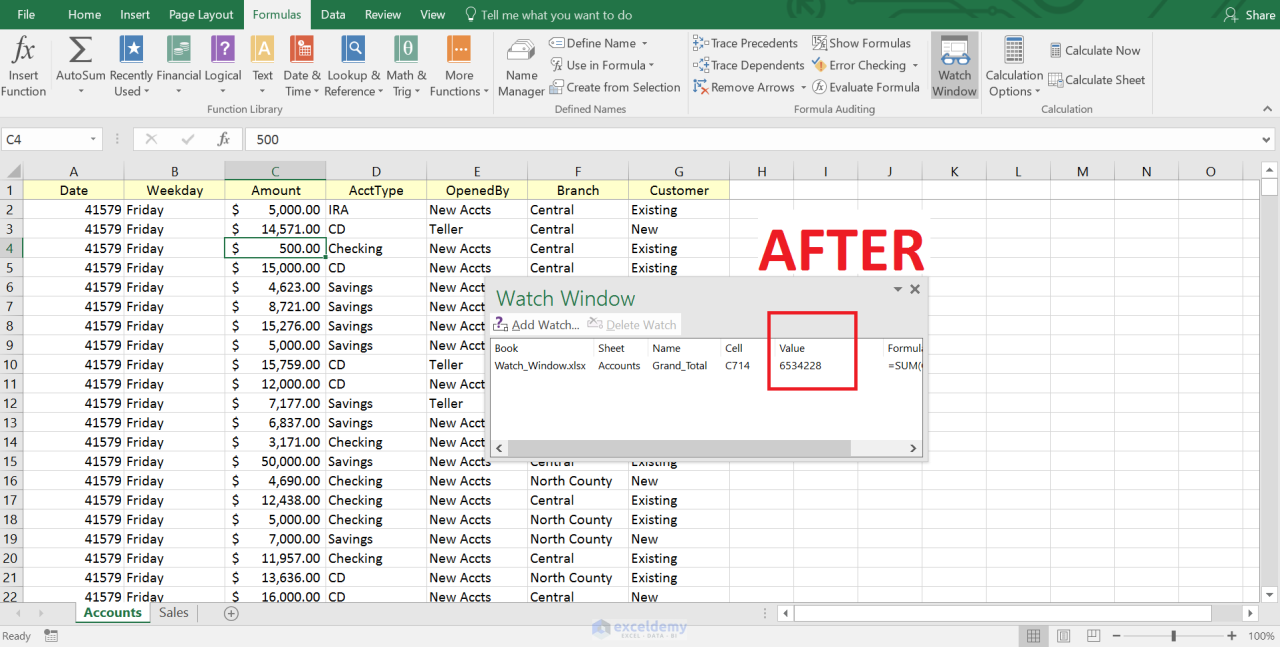
This section provides a practical example of how to use a watch window to monitor cell values during a program’s execution. The example demonstrates the functionality and the interpretation of data within the watch window.A hypothetical program monitors the status of various cells in a spreadsheet application. The program needs to track changes in these cells to trigger specific actions.
This example focuses on the watch window’s role in efficiently tracking these changes.
Hypothetical Program: Spreadsheet Cell Monitoring
The program, named “Spreadsheet Watcher,” is designed to monitor cell values in a spreadsheet. It utilizes a watch window to track changes in specific cells. The purpose of monitoring these cells is to trigger automated responses based on their contents. For instance, if a cell containing a sales target is updated, the program can automatically calculate the current progress towards the target and notify the user.
Program Functionality and Watch Window Use
The “Spreadsheet Watcher” program reads data from a spreadsheet. It defines a set of cells (e.g., “A1”, “B2”, “C3”) to be monitored. A watch window is utilized to display the current values of these cells in real-time. When a cell’s value changes, the watch window immediately updates. The program reacts to the changes by triggering alerts or performing calculations based on the new value.
Data Interpretation in the Watch Window
The watch window displays the current value of each monitored cell. The format of the display is critical for understanding the data. For example, if a cell contains a numerical value, the watch window will display the number. If a cell contains a date, the watch window will display the date in a recognizable format. The watch window also displays the cell’s address, allowing for easy identification.
Sequence of Events for Watch Window Use
- The program starts, and the watch window is initialized to display the initial values of the monitored cells. For example, the current value of cell “A1” might be “100”.
- The user modifies the value of a monitored cell (e.g., “A1”).
- The watch window immediately updates to reflect the new value. For example, the value of cell “A1” is updated to “150”.
- The program detects the change in the value of cell “A1” and performs an action based on the new value (e.g., a notification is sent to the user).
- The watch window continuously displays the current value of all monitored cells. For example, cell “B2” displays its current value. This continuous display enables the user to track changes in real-time.
Example Data Display in Watch Window
| Cell Address | Initial Value | Updated Value |
|---|---|---|
| A1 | 100 | 150 |
| B2 | 25 | 25 |
| C3 | “Order Placed” | “Order Shipped” |
This table illustrates how the watch window updates to reflect changes in the monitored cells. Note that only cell A1 has been modified.
Final Wrap-Up

In conclusion, mastering watch windows provides a significant advantage in the debugging process. This comprehensive guide has explored the various facets of watch windows, from fundamental concepts to advanced techniques. By understanding the diverse capabilities and customizing watch window behavior, developers can significantly enhance their debugging workflow and produce more robust software. The detailed examples and troubleshooting sections ensure a practical understanding of this valuable debugging tool.