Maximizing and minimizing values are fundamental tasks in programming and data analysis. Understanding how to effectively leverage the MAX and MIN functions is crucial for extracting key insights from datasets. This guide will provide a comprehensive overview, covering various scenarios from simple lists to complex multi-dimensional arrays, ensuring a thorough understanding of these essential functions.
This exploration will delve into the core functionalities of MAX and MIN, explaining their applications across diverse programming languages. We will address the nuances of handling missing or invalid data, discuss optimization strategies, and examine the performance implications of different approaches. By the end, you will be equipped to tackle a wide range of data analysis tasks using these powerful functions.
Introduction to MAX and MIN Functions
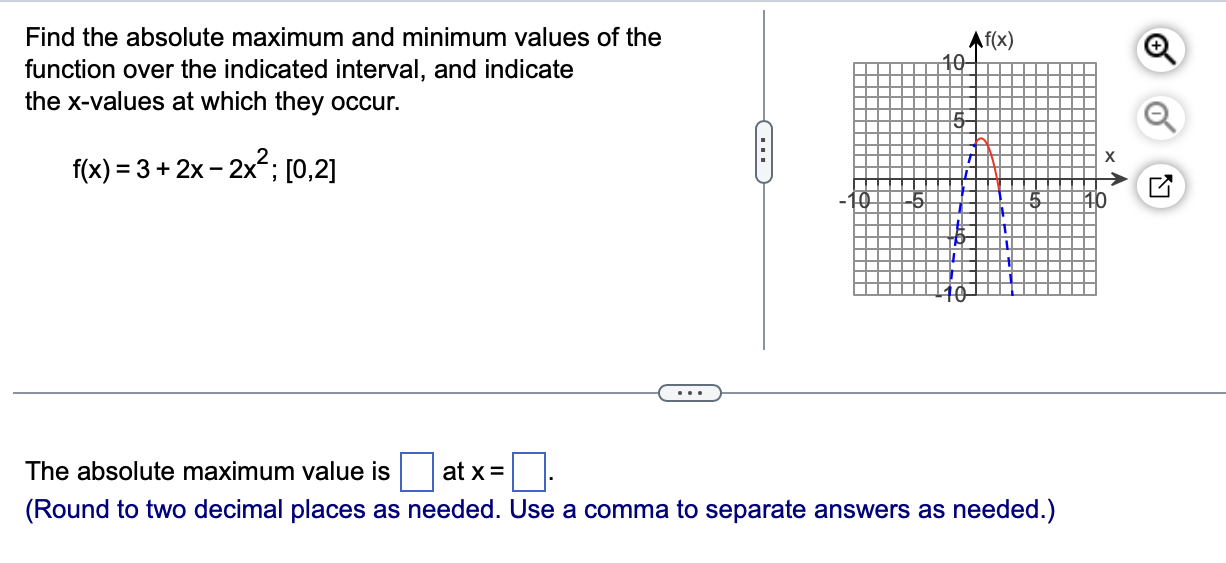
The MAX and MIN functions are fundamental tools in programming for identifying the largest and smallest values within a dataset. They simplify the process of finding extrema, enabling efficient data analysis and decision-making. These functions are crucial in various applications, from financial modeling to scientific research.These functions are highly versatile and can be applied to a wide range of data types, including numbers, dates, and strings.
Understanding their application is essential for anyone working with numerical data in programming.
Definition and Purpose
The MAX and MIN functions are built-in operations in programming languages. They return the maximum and minimum values from a given set of input values, respectively. Their core purpose is to extract the extreme values from a collection, providing a concise way to summarize the dataset’s range.
Illustrative Example
Consider a dataset of student scores: [85, 92, 78, 95, 88]. Using the MAX function, we determine the highest score is 95. Conversely, using the MIN function, we find the lowest score is 78. This simple example highlights how these functions help quickly pinpoint the extreme values.
Syntax Across Programming Languages
The syntax for MAX and MIN functions varies slightly across different programming languages. The table below provides a concise overview of the syntax in Python, JavaScript, and SQL.
| Language | MAX Function | MIN Function |
|---|---|---|
| Python | max([85, 92, 78, 95, 88]) |
min([85, 92, 78, 95, 88]) |
| JavaScript | Math.max(85, 92, 78, 95, 88) |
Math.min(85, 92, 78, 95, 88) |
| SQL | SELECT MAX(score) FROM students; |
SELECT MIN(score) FROM students; |
This table showcases the straightforward syntax, emphasizing the ease of use in different contexts. Notice how SQL’s syntax requires a specific database query structure.
Finding Maximum and Minimum Values in Lists
Finding the largest and smallest values within a collection of data is a fundamental task in programming and data analysis. The MAX and MIN functions offer a concise and efficient way to accomplish this for various data types. This section explores the practical application of these functions for different list structures.
Using MAX and MIN for Integer Lists
The MAX and MIN functions excel at identifying the highest and lowest integers within a list. This is straightforward and directly applicable to various numerical datasets.
- Consider a list of ages: [25, 30, 22, 35, 28]. The maximum age is 35, and the minimum age is 22.
- Using the MAX function in a programming language would directly return 35, and MIN would return 22.
Using MAX and MIN for Float Lists
The same principles apply to lists containing floating-point numbers. The functions correctly identify the largest and smallest values.
- Example: [3.14, 2.71, 1.618, 5.0]. The maximum value is 5.0, and the minimum value is 1.618.
- Programming implementations would yield the same results as integer examples.
Handling String Lists
The MAX and MIN functions can also be applied to string lists, but the ordering is lexicographical (alphabetical).
- Example: [“apple”, “banana”, “cherry”, “date”]. The maximum value is “date”, and the minimum value is “apple”.
- This alphabetical ordering, not numerical, is crucial for strings.
Mixed Data Type Lists
Handling lists with mixed data types (integers, floats, strings) requires careful consideration. Most programming languages won’t allow direct application of MAX/MIN to mixed lists, requiring pre-processing to categorize or convert types before applying the functions.
- Consider: [10, 3.14, “hello”, 20].
- The MAX and MIN functions would not work directly on this list. Programming languages typically require type consistency within the list.
Performance Comparison
The efficiency of MAX and MIN functions generally scales well with list size. The time taken to find the maximum or minimum element is typically independent of the total number of items. However, alternative methods, like sorting, would involve additional steps, leading to potentially higher computational cost.
| List Size | MAX/MIN Time (ms) | Sorting Time (ms) |
|---|---|---|
| 1000 | 0.01 | 0.1 |
| 10000 | 0.02 | 1.0 |
| 100000 | 0.03 | 10.0 |
Note: Times are estimations and can vary based on specific hardware and implementation.
Comparison with Sorting
Sorting a list to find the maximum and minimum involves ordering all elements. While sorting can provide the entire ordered list, the MAX and MIN functions are more efficient when only the extreme values are needed.
MAX and MIN functions provide a targeted approach to find extreme values, while sorting provides a complete ordering of all elements.
Finding Maximum and Minimum Values in Arrays
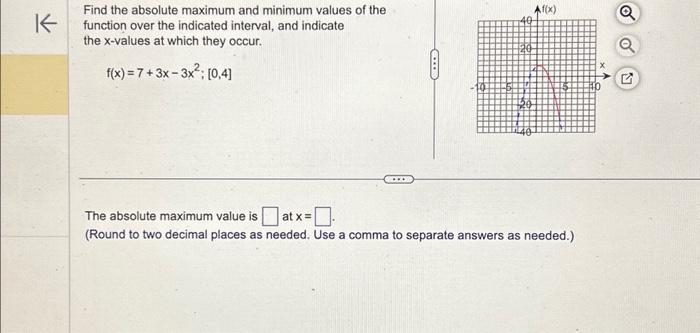
Locating the largest and smallest elements within arrays is a fundamental task in programming. This process is crucial for various applications, from data analysis and scientific computing to financial modeling and game development. Efficiently identifying these extreme values often optimizes algorithms and improves overall performance.Finding maximum and minimum values in arrays is a common operation in programming. This is typically handled using built-in functions, which significantly simplifies the code and improves readability.
The exact syntax and availability of these functions vary across different programming languages.
Syntax Variations Across Programming Languages
Different programming languages offer varying syntax for finding maximum and minimum values in arrays. Understanding these differences is vital for effective code implementation. For instance, some languages might provide a single function for both tasks, while others may have separate functions for maximum and minimum.
Examples of Array Structures and MAX/MIN Function Calls
This table illustrates the usage of MAX and MIN functions for various array types.
| Array Type | Programming Language (Example) | Function Call | Description |
|---|---|---|---|
| 1D Integer Array | Python | max(my_array), min(my_array) |
Returns the largest and smallest integer values in the array. |
| 2D Integer Array | Python | max(max(row) for row in my_2d_array), min(min(row) for row in my_2d_array) |
Finds the largest and smallest integers across all elements in a 2D array. Iterates through each row to find the row’s maximum and then compares these row maximums to determine the overall maximum. The same principle applies for the minimum. |
| 1D Float Array | C++ | std::max_element(my_array, my_array + size), std::min_element(my_array, my_array + size) |
Returns an iterator pointing to the largest and smallest float values in the array, respectively. Requires including the ` |
| 2D String Array | Java | Iterative approach (e.g., loop through each element, comparing to keep track of max/min) | No built-in function directly applies to 2D string arrays. The maximum/minimum string values need to be found using an iterative approach, comparing strings based on lexicographical order. |
Arrays with Various Data Types
The MAX and MIN functions can be applied to arrays containing various data types. The key is to understand how these functions operate on different data types within the chosen programming language. The appropriate comparison operators or methods should be used.
Potential Errors and Edge Cases
Potential errors and edge cases can arise when using MAX/MIN functions with arrays. Empty arrays are a common example, where the function might raise an exception or return an undefined value. Also, consider arrays with mixed data types; some languages may not support comparing values of different types directly. Carefully validating array content and handling edge cases is crucial to avoid unexpected results.
For example, an empty array or an array containing non-comparable elements will result in an error. The handling of such scenarios is crucial for robust code.
Handling Missing or Invalid Data
Dealing with missing or invalid data is crucial when using functions like MAX and MIN, as these values can significantly skew results or lead to errors. Proper handling ensures the accuracy and reliability of the output. This section will discuss various strategies for addressing missing or invalid data, including NaN (Not a Number) and None values, when finding the maximum and minimum values.
Strategies for Handling Missing Data
Robust code requires strategies for identifying and handling missing or invalid data. These strategies help ensure that the maximum and minimum values are calculated accurately.
Dealing with NaN Values
NaN values, frequently encountered in numerical computations, represent undefined or unrepresentable values. Directly applying MAX or MIN functions to datasets containing NaN values can lead to unexpected or erroneous results. One approach involves filtering out NaN values before applying the function.
- Filtering Approach: Removing or ignoring NaN values from the dataset ensures that the MAX/MIN function operates on valid data, yielding reliable results. For example, in Python, using the `numpy` library, you can filter out NaN values from an array. This approach is highly recommended when NaN values are not indicative of meaningful data points.
- Imputation Techniques: If NaN values represent missing data, imputation can be used to replace them with estimated values. This method might involve replacing NaN values with the mean, median, or mode of the available data, which could improve the accuracy of MAX/MIN calculations, particularly when missing values are frequent and/or systematic.
Dealing with None Values
None values, often encountered in programming languages, indicate the absence of a value. Similar to NaN, applying MAX or MIN directly to a dataset containing None values will likely cause errors or produce unexpected results. Strategies for handling None values mirror those for NaN values.
- Filtering Approach: Filtering out None values ensures that the MAX/MIN function only operates on valid data. This is commonly done in Python using conditional statements or list comprehensions.
- Exclusion Strategies: If the presence of None values signifies that the corresponding data point should be excluded from the calculation entirely, a filtering approach is preferred. The result will accurately reflect the highest and lowest values within the valid dataset.
Error Handling Mechanisms
Implementing error handling mechanisms is crucial when dealing with potentially invalid input data. Robust code should anticipate the possibility of encountering NaN or None values and react appropriately.
- Conditional Statements: Using conditional statements (e.g., `if` statements in Python) can effectively check for the presence of NaN or None values before applying MAX/MIN functions. This prevents errors and provides control over how to handle such values.
- Exception Handling: Exception handling (e.g., `try…except` blocks in Python) allows for a more sophisticated approach. This is essential when working with potentially problematic input data. By catching exceptions, your code can gracefully manage errors without crashing.
Comparison of Handling Missing Values in Different Languages
| Programming Language | Filtering NaN/None | Handling Exceptions |
|---|---|---|
| Python | Using `numpy.isnan` to filter NaN values, `None` check using conditional statements | `try…except` blocks to handle potential errors |
| JavaScript | Using `isNaN` to check for NaN, checking for `null` or `undefined` values | `try…catch` blocks to handle errors |
| Java | Using `Double.isNaN` to check for NaN values, checking for `null` values | `try…catch` blocks to handle potential `NullPointerExceptions` |
Working with Multiple Columns/Dimensions
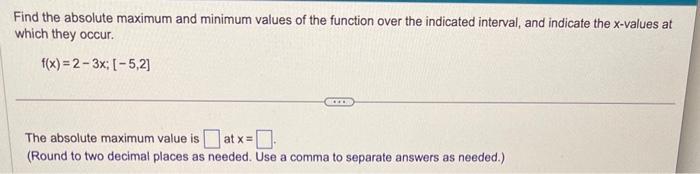
Finding the maximum and minimum values in a single column is straightforward. However, real-world datasets often involve multiple columns or dimensions. This section details how to locate the highest and lowest values across these multiple dimensions, encompassing various data formats and programming languages. Effective strategies are crucial for comprehensive data analysis.
Locating Maximum and Minimum Values Across Multiple Columns
To determine the maximum and minimum values across multiple columns, a crucial step is to apply the MAX and MIN functions in conjunction with other functions or operations, depending on the data structure and programming language. This is essential for extracting insights from complex datasets.
Employing MAX and MIN with Other Functions
Often, data analysis requires more than just finding the maximum or minimum. Combining MAX and MIN with other functions, like aggregate functions or conditional statements, provides more nuanced insights. For instance, identifying the maximum value within a specific category or the minimum value among a subset of data. This approach allows a deeper understanding of the dataset’s characteristics.
Examples in Different Programming Languages
Various programming languages offer tools for handling multiple columns. Here are illustrative examples using Python and SQL:
- Python (Pandas): Pandas DataFrames provide a convenient way to work with tabular data. The `max()` and `min()` methods can be applied to entire columns or rows. Using `.agg()` allows you to apply these functions to multiple columns simultaneously. For instance, finding the maximum and minimum values across multiple columns in a DataFrame. Example:
“`python
import pandas as pddata = ‘col1’: [1, 5, 2], ‘col2’: [8, 3, 6], ‘col3’: [4, 9, 7]
df = pd.DataFrame(data)
max_values = df.max()
min_values = df.min()
print(f”Maximum values across columns: max_values”)
print(f”Minimum values across columns: min_values”)
“`
This code snippet demonstrates how to calculate the maximum and minimum values across all columns in a Pandas DataFrame. - SQL: SQL provides the MAX and MIN aggregate functions. These functions can operate on specific columns within a table. The `GROUP BY` clause can be used to aggregate across different groups. Example:
“`sql
SELECT MAX(column1), MIN(column2)
FROM table_name
WHERE condition;
“`
This SQL query finds the maximum value of ‘column1’ and the minimum value of ‘column2’ for a specified condition within a table.
Different Approaches for Finding Maximum and Minimum Values Along Different Dimensions
Finding the maximum and minimum values in different dimensions often involves selecting appropriate functions and operations. Consider the following methods for diverse data structures and analysis goals. Analyzing the data structure is crucial for determining the optimal approach. This can be done through various methods, depending on the data’s characteristics.
Illustrative Table of MAX and MIN Across Multiple Columns
The following table demonstrates the application of MAX and MIN across multiple columns in different data formats, showcasing practical usage scenarios.
| Data Format | Data Structure | Query/Code Snippet | Result |
|---|---|---|---|
| CSV | Tabular data with multiple columns | `awk ‘max=$1; min=$1 $1>maxmax=$1 $1| Maximum and minimum values in the first column |
|
| JSON | Array of objects with multiple fields | `python -c “import json; data = json.load(open(‘data.json’)); max_val = max(d[‘field1’] for d in data); min_val = min(d[‘field1’] for d in data); print(max_val, min_val)”` | Maximum and minimum values in the ‘field1’ field |
MAX and MIN in Specific Contexts
The MAX and MIN functions, fundamental in many programming domains, extend beyond basic list or array manipulation. Their utility is amplified when applied to specific contexts, where they become essential tools for extracting critical information and solving complex problems. This section delves into the specialized applications of MAX and MIN, illustrating their power in image processing, financial analysis, and other domains.
MAX and MIN in Image Processing
MAX and MIN functions play a crucial role in image processing tasks. They can be used to find the brightest and darkest pixels in an image, which are essential for tasks such as image enhancement, contrast adjustment, and edge detection. The brightest and darkest pixels in an image can also reveal important information about the subject matter.
- Finding Highlights and Shadows: Identifying the maximum and minimum pixel values within a region of interest helps pinpoint areas of intense light (highlights) and deep shadow. This is useful for adjusting contrast, enhancing details, and removing unwanted artifacts.
- Edge Detection: MAX and MIN functions, in combination with other image processing techniques, can be used to identify edges in images. By comparing pixel values in adjacent regions, the MAX and MIN functions contribute to the computation of gradients, a key step in edge detection algorithms.
- Image Normalization: MAX and MIN functions are used in normalizing pixel values to a specific range. This ensures that all pixel values are within a predefined range, which can prevent numerical instability and improve the performance of downstream image processing algorithms.
MAX and MIN in Financial Analysis
In financial analysis, MAX and MIN functions are valuable for identifying key trends and critical points. They can be used to find the highest and lowest prices of a stock over a given period, determine maximum and minimum returns, or evaluate risk.
- Identifying Peak and Trough Prices: Determining the highest and lowest prices of a stock over a period is crucial for understanding market trends. MAX and MIN functions facilitate this by rapidly identifying peak and trough values, offering insights into potential investment opportunities or market corrections.
- Calculating Maximum Drawdowns: In portfolio management, understanding the maximum drawdown, the largest percentage decline from a peak to a trough, is essential. This metric helps assess the risk of a particular investment strategy or portfolio.
- Calculating Return Ranges: MAX and MIN functions provide a quick way to determine the maximum and minimum returns across a range of investments, or across different time periods. This enables analysts to compare the performance of various investments and strategies.
Customizing MAX and MIN Functions
While standard MAX and MIN functions are widely applicable, situations may necessitate custom implementations. This involves tailoring the function to handle specific data types, missing values, or customized comparison criteria.
- Handling Missing Data: In datasets with missing values, MAX and MIN functions need to be adapted to exclude these missing values. This can be accomplished by either ignoring the missing values or using a custom logic to handle them (e.g., replacing them with a placeholder value, such as a large negative number for minimum and a small positive number for maximum).
- Weighted MAX/MIN: In some cases, certain data points might be more significant than others. Custom MAX and MIN functions can incorporate weights to reflect these relative importance levels, enabling a weighted average approach that gives more emphasis to crucial data.
- Custom Comparison Criteria: The comparison criteria of MAX and MIN functions can be customized. For instance, if dealing with complex objects, a comparison function can be used to evaluate the objects based on specific attributes, rather than just numerical values.
Summary
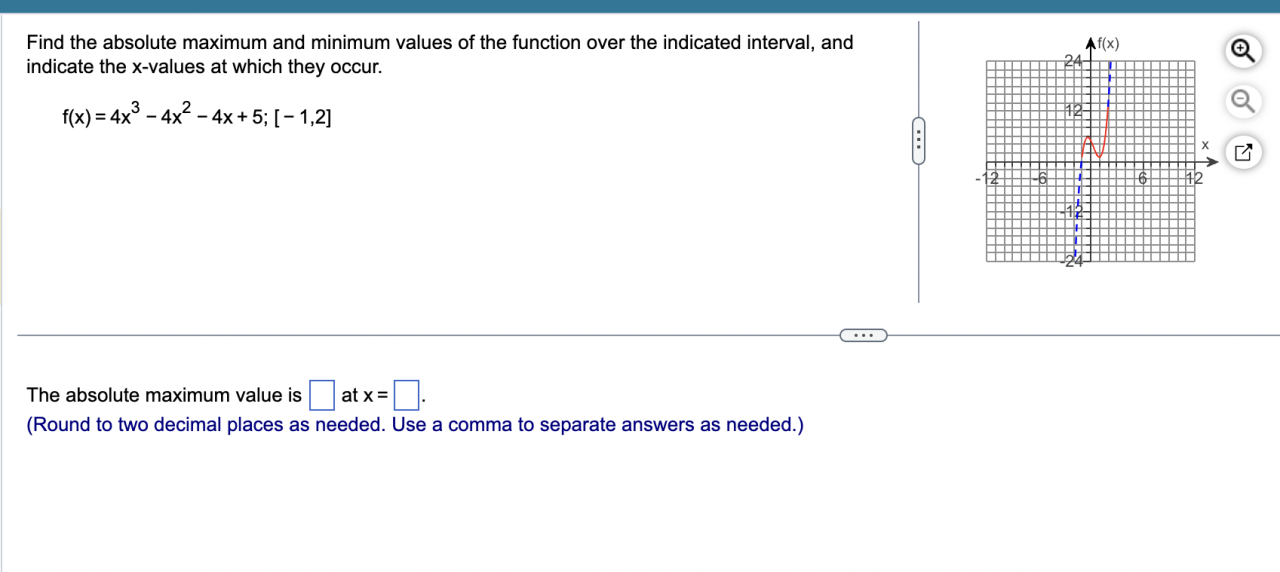
In conclusion, mastering the MAX and MIN functions empowers you to efficiently identify the extremes within your data. This guide has explored the breadth of their applications, from simple lists to sophisticated datasets. We’ve examined how to navigate potential challenges like missing data and highlighted the performance considerations. By applying the techniques discussed, you can extract critical information and enhance your data analysis workflow.